Buying Guide
Coffee table care guide for wooden tables and TV units
By the Özbay Furniture team 10 min read
The short answer
Coffee table care is really about protecting the wood finish on everyday pieces such as dining tables, consoles and TV units. The direct answer is simple: dust often, wipe spills straight away, use coasters and mats, keep furniture away from strong heat and sunlight, and follow the maker’s cleaning advice for the finish. If you are shopping in the UK, most wooden pieces for these rooms sit roughly between 100 and 220 cm long and £250 to £1,500, with solid wood usually costing more than veneer or wood-finish board.
Key takeaways
- Dust wooden furniture weekly and wipe spills straight away.
- Use coasters, placemats and felt pads to protect the finish.
- Choose the right cleaner for lacquered, oiled or veneered wood.
- Measure access carefully before ordering any large wooden piece.
- Expect about £100 to £1,500 depending on size, wood and finish.
- In-stock pieces usually arrive in 3–5 weeks; bespoke in 6–8 weeks.
Coffee table care: what should you do first?
Start by identifying the finish, because care changes with the surface. A lacquered or painted wooden table usually needs a dry or slightly damp microfibre cloth, while oiled wood may need a product made for oiled furniture. If you are not sure, test any cleaner on a hidden area first and never soak the wood.
For an everyday routine, dust once or twice a week and clean spills as soon as they happen. Water rings, tea marks and food stains are easier to prevent than remove, especially on dining tables used every day. A simple habit, such as wiping after each meal, will do more than any polish used once a month.
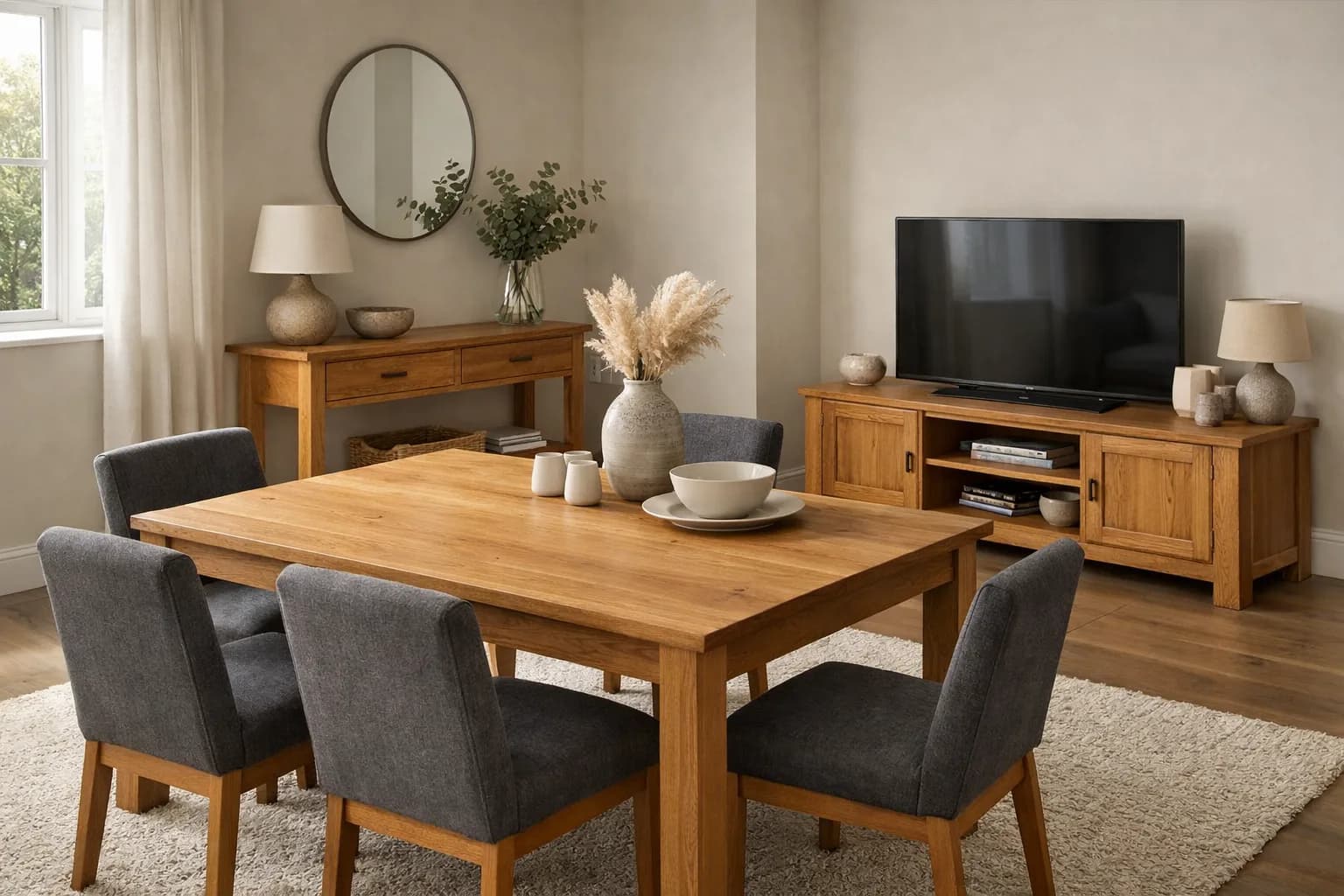
Use placemats, coasters and felt pads under bowls, lamps and decor. Keep hot pans, wet plant pots and abrasive cleaning pads off the surface. This matters just as much for a coffee table as it does for larger pieces like our dining tables or a TV unit in a family room.
Coffee table materials: which wood type is easiest to care for?
Solid hardwood is usually the most durable option, but it still needs sensible care. Oak, ash and walnut can handle daily use well, yet they can mark if left with spills or heat on them. Veneered furniture can look similar and often costs less, but once the top layer is damaged it is harder to repair.
MDF or chipboard with a wood finish is common at lower price points. It can be fine for light use, but edges and corners are more vulnerable to chipping and swelling if water gets in. If you want a piece for a busy home, check how the edges are sealed and whether the top is easy to wipe.
For UK shoppers comparing options, smaller wooden coffee tables are often around 60 to 120 cm long and from about £120 to £600, while matching console tables and TV units can run from about £250 to £1,200 depending on size and material. If you want a coordinated look rather than a one-off piece, it can help to browse our accessories and custom-made furniture for matching finishes.
- Best for easy care: sealed lacquer or well-finished veneer.
- Best for long life: solid hardwood with proper sealing.
- Avoid if you want low maintenance: poorly sealed edges and raw timber tops.
How do you clean a wooden dining table without damaging it?
Use a soft dry cloth first, then a cloth barely dampened with warm water and a mild cleaner if needed. Dry the surface straight after cleaning so moisture does not sit in the grain or joints. Never use bleach, steam cleaners or harsh spray polish on a daily basis.
For sticky marks, use a mild soap solution and work gently with the grain. If the finish is waxed or oiled, avoid universal cleaners unless the maker says they are safe for that surface. The goal is to clean the dirt, not strip the protective layer.
If you are buying a dining set for a flat or family home, think about cleaning as part of the purchase. A table around 160 to 200 cm long usually suits most UK dining rooms, and chairs should leave enough room to move around comfortably. You can compare styles in our dining rooms, where finishes and proportions are chosen to suit everyday use. Every upholstered sofa, armchair and bed sold in the UK must carry a permanent fire-safety label under the Furniture and Furnishings (Fire) (Safety) Regulations 1988, so check for it before you buy.
- Do: wipe spills immediately.
- Do: use coasters for cups and glasses.
- Do not: scrub with scourers or rough cloths.
- Do not: leave water sitting under vases or trays.
How should you care for a wooden console or TV unit?
Console tables and TV units get less food spill risk than dining tables, but they face dust, cable clutter and heat from electronics. Dust shelves, legs and edges weekly, and keep ventilation gaps clear behind a TV unit so warm air can escape. If the unit has drawers or doors, open them now and then so moisture and dust do not build up inside.
Be careful with lamps, routers and games consoles, because they can leave marks or heat patches if placed directly on the surface. Use felt pads under bases and keep cables tidy so they do not rub the finish. A console around 90 to 140 cm long is common in UK homes, while larger TV units are often 140 to 220 cm wide depending on the television.
This is where matching proportions matter. A small hallway console may need a lighter design, while a living room unit needs more storage and a stable top. If you are choosing a set that works across rooms, our corner sofas and sofa collections can help you keep the same design language in the home without crowding the room.
What are the main mistakes UK buyers make with wooden furniture?
The most common mistake is buying by look alone and not checking measurements. Measure the full path to the room, including front door, hallway, stairs and lift, before ordering. If a piece will not fit through, it cannot be cancelled or refunded, so this is one of the most important checks you can do.
Another common error is treating all wood finishes the same. A light dusting routine is fine for most items, but oiled, lacquered and painted surfaces need different care. People also forget that sunlight can fade timber over time, so avoid placing a wooden table or unit directly beside strong windows if you can.
The third mistake is choosing a size that looks good online but is awkward at home. For example, a 180 cm dining table may suit a medium room, but a 240 cm table can dominate a narrow space. If you want help with a made-to-measure piece, Özbay Furniture can quote for custom size, fabric or colour before production, and most designs can be made to measure.
- Measure doors, hallways, stairs and lifts before ordering.
- Check the finish: lacquered, oiled, painted or veneer.
- Keep wood out of harsh sun and away from radiators.
- Choose a size that leaves walking space around it.
What should you expect to pay in the UK in 2026?
For wooden coffee tables and small console pieces, realistic UK prices vary mainly by material and finish. A simple wood-finish table may start around £100 to £250, while solid wood or designer pieces can move into the £400 to £1,000 range. Larger dining tables and TV units often cost more because they use more material and need more careful delivery.
As a rough guide, a good quality console table might sit between £250 and £700, and a wooden TV unit between £300 and £1,200. Dining tables can range from around £350 to £1,500 or more for larger or bespoke pieces. If you want a coordinated room, the total cost of a dining set or living room set is usually lower than buying each piece separately.
Özbay Furniture London sells Italian-inspired designs made in Türkiye, and the made-to-order route is useful when standard sizes do not fit. In-stock pieces typically arrive in 3 to 5 weeks, while made-to-order and bespoke pieces take 6 to 8 weeks. Greater London delivery to the door is free, and delivery elsewhere in England, Scotland and Wales is quoted on WhatsApp.
- Budget wood-finish coffee table: about £100 to £250.
- Mid-range console or TV unit: about £250 to £700.
- Solid wood or bespoke pieces: about £700 to £1,500+.
How do delivery, assembly and aftercare affect care?
Good aftercare starts before the furniture arrives. Measure your home carefully, especially if you live in a flat or a house with tight stairs, because delivery teams need clear access. Özbay’s paid extras include sofa installation £50, bedroom set installation £200, dining room installation £150, carry-in £100 with a lift or £250 without a lift for a full 3+3+1 set, and upstairs carry £150 per set.
Once the piece is in place, let it settle before loading it up with heavy decor. Check legs, doors and drawers after delivery, and keep the warranty note safe: there is a 2-year warranty on frame and manufacturing, and technical service visits are within 30 to 45 days. If you ordered a fabric outside the colour card, it is made to order and cannot be cancelled or refunded, but it stays fully guaranteed.
For shoppers who want to compare room types before ordering, it helps to look at real sets rather than single pieces. For example, the Dublin Sofa Set from £2,608, the Rio Ada Dining Room Set from £3,306, and the Palermo Dining Room Set from £4,365 show how style, scale and finish can vary across a home.
- Check access before you pay for delivery.
- Keep warranty and order details together.
- Inspect the finish and joints as soon as the piece arrives.
A simple care routine for the first 12 months
In the first month, dust weekly and remove any shipping residue with a soft cloth. In month two, check whether the finish needs a product recommended for that surface, especially if the furniture is oiled. After that, keep to a light weekly routine rather than occasional deep cleaning.
At the six-month point, look for tiny marks around handles, edges and feet, because these are the places that take the most wear. Tighten any loose fittings if the maker allows it, and keep furniture feet level so the table or unit does not rock. This helps protect joints as well as the surface finish.
If you are furnishing a whole room, think in terms of how pieces work together rather than how they look alone. A well-sized table, console or TV unit should leave enough room to move and clean around it, and should still look balanced after years of use. For more options, you can browse Sofa Sets and Dining Rooms to see how coordinated furniture can simplify styling.
Pieces from our collection
Real designs mentioned in this guide — delivered free to your door across Greater London.


Frequently asked questions
Dust it regularly with a soft cloth, then wipe with a barely damp microfibre cloth if needed. Dry it straight away and avoid harsh sprays, bleach or soaking the wood.
Most UK living rooms suit a coffee table around 60 to 120 cm long, leaving space to walk around it. If the room is small, choose a lighter shape and make sure the table does not block drawers, doors or the route to the sofa.
Mostly yes, but a TV unit needs extra attention around cables, heat and dust build-up. Keep vents clear and avoid placing hot electronics or heavy items directly on unprotected wood.
Solid wood is usually the most durable, but it costs more and still needs proper care. Veneer can be a good middle option, while wood-finish board is often the cheapest but more sensitive to chips and swelling.
Measure the door, hallway, stairs and lift before ordering, because if the furniture cannot fit through, it cannot be cancelled or refunded. If you are unsure, ask for help before you place the order.