Buying Guide
Corner sofa or 3+2+1 sofa set: UK buying guide
By the Özbay Furniture team 12 min read
The short answer
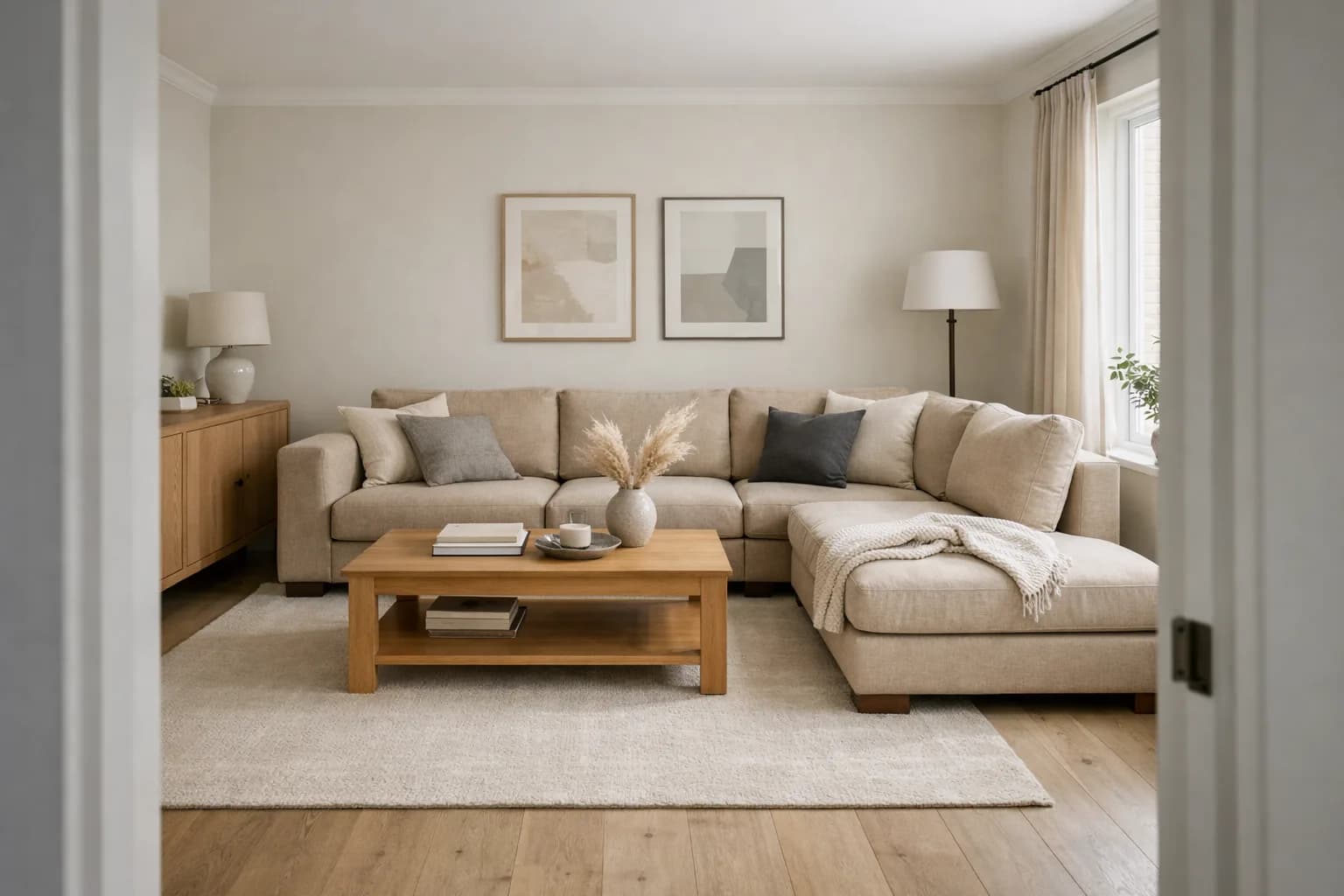
A corner sofa usually suits a UK living room if you want the most seating in one footprint and your room shape supports an L layout. A 3+2+1 sofa set suits you better if you want more flexible seating, easier moving, and a formal match for separate seating zones. The right choice depends on your room size, door widths, and how you actually use the space, not just on style.
Key takeaways
- Choose a corner sofa for one main seating zone and a cleaner lounge layout.
- Choose a 3+2+1 set if you need flexibility or tighter access handling.
- Measure walls, doors, stairs and lift in cm before you order.
- Budget from the mid-£2,000s for quality made-to-order seating.
- Allow 3–5 weeks for in-stock pieces and 6–8 weeks for made-to-order.
- Check delivery and carry-in costs before you commit.
Corner sofa or 3+2+1 sofa set: which is right for a UK living room?
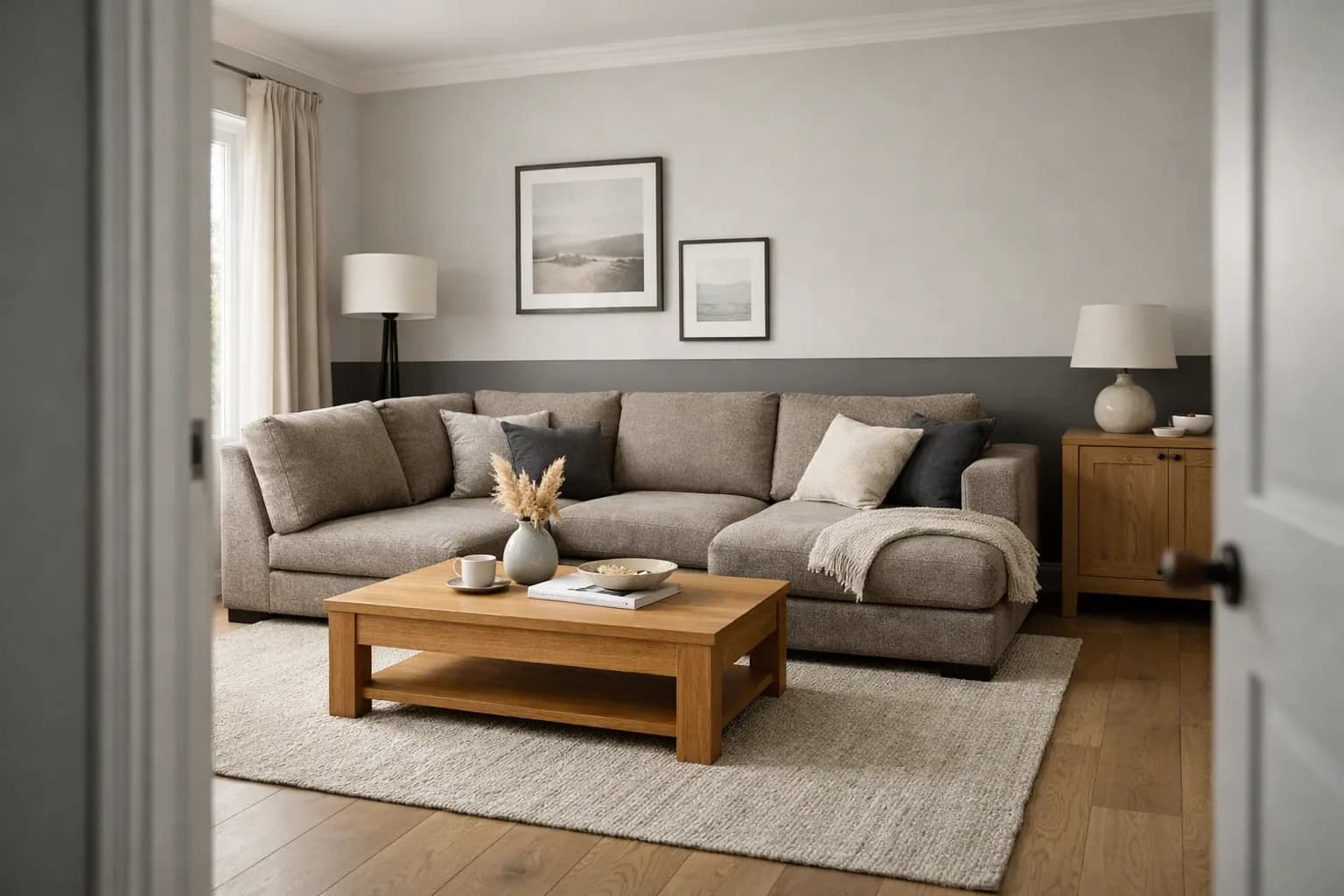
If you are choosing between a corner sofa and a 3+2+1 sofa set, start with the room shape. A corner sofa is usually the better answer for open-plan rooms, family living rooms, or square rooms where one long wall and one shorter wall can hold an L shape. A 3+2+1 sofa set is usually better when you want separate seats, a more traditional layout, or the option to move pieces around later.
In simple terms, a corner sofa gives you one connected seating area, while a 3+2+1 gives you three separate pieces. For many UK homes, that makes the corner sofa feel more efficient, but the set feel more adaptable. If you often move house, or if your stairs and doors are tight, the separate pieces can be easier to deliver and manoeuvre.
For many readers, the real question is not style but fit. A sofa that looks right in the showroom can feel too large at home if it blocks a radiator, narrows a walkway, or leaves too little space for a coffee table. Measure the room in centimetres, not just in steps, and think about how you walk through the space every day.
- Choose a corner sofa if you want maximum seating in one main footprint.
- Choose a 3+2+1 set if you want flexibility and easier room changes.
- Choose separate pieces if your home has narrow stairs or awkward turns.
- Choose the layout that leaves at least 70–90 cm for walkways.
How much space does a corner sofa need?
A typical UK corner sofa often needs a wall run of around 250–330 cm on one side and 200–280 cm on the other, though exact sizes vary. That is why corner sofas are made to the customer's wall lengths at Özbay Furniture London, rather than being treated as one fixed standard size. If your room is small, a compact corner can still work, but you should plan for the full footprint, not just the seat width.
When planning a corner sofa, allow space for movement as well as seating. A useful rule is to leave about 70 cm for a clear passage, and 90 cm where people regularly walk through the room. Also check how far the chaise or return section projects into the room, because that part often causes the first layout problem.
A 3+2+1 set can sometimes fit a room that cannot take a corner sofa, because the pieces can be split across different walls. For example, a 3-seater at around 210–240 cm, a 2-seater at around 160–200 cm, and an armchair at around 85–110 cm wide can be arranged in more than one way. This is useful in long, narrow living rooms where a single L shape would crowd the centre.
- Measure both wall lengths in cm before you choose a corner sofa.
- Check where the room narrows near doors, radiators and windows.
- Leave 70–90 cm for walkways and at least 40–50 cm around a coffee table.
- If you have a bay window or chimney breast, sketch the room to scale.
Corner sofa size, 3-seater size and 2-seater size: what UK buyers should check
Most UK shoppers want concrete numbers before they order. A common 3-seater sofa is roughly 220 cm wide, a 2-seater around 180 cm, and an armchair about 90 cm wide, though upholstered arms can add to the overall size. With a 3+2+1 sofa set, the total seating width is often around 490 cm or more when the pieces are lined up, so the set needs a room with enough wall space or a layout that uses different sides of the room.
For a corner sofa, check the two wall lengths separately and also the depth. Many corner sofas have a depth of about 90–105 cm on the main seats and more where the chaise or corner section turns. A room that is 400 cm by 350 cm may be comfortable for a corner sofa if the TV wall and walkway are planned properly, but the same room may feel cramped if you also want large side tables and a wide rug.
If you are unsure, draw the sofa outline on the floor with newspaper or masking tape. This is the quickest way to see whether a corner sofa will leave enough space for a footstool, a coffee table, or a dining area nearby. It also helps you decide whether a more modular 3+2+1 layout suits your daily use better.
- Check width, depth and seat height, not width alone.
- Mark doors, sockets, radiators and TV position on the plan.
- Use tape on the floor to test the corner sofa footprint.
- If space is tight, compare a compact 3+2+1 against an L shape.
What materials and frame quality should you look for?
Whatever shape you choose, the frame matters more than the label on the layout. Özbay Furniture London uses sofa frames made from kiln-dried hornbeam hardwood, which is a practical choice for strength and stability. For the cover, choose a fabric that suits how you use the room: velvet for a softer look, woven fabric for everyday use, or a fabric that is easy to keep tidy if you have children or pets.
If you are comparing a corner sofa with a 3+2+1 set, the same material rules apply. A larger corner sofa makes the fabric choice more visible because there is more uninterrupted surface, while a 3+2+1 can mix comfort with easier cleaning because the pieces are separate. Most designs at Özbay can be ordered in a custom size, fabric or colour, and the price is confirmed before production.
If you choose a fabric outside the colour card, it is made to order and cannot be cancelled or refunded, although it stays fully guaranteed. That is useful if you want a very specific shade, but it also means you should be certain about the sample or finish before you commit. For more on the type of construction behind a solid frame, see what a kiln-dried hardwood sofa frame means if you want the technical background.
- Ask what the frame is made from before discussing fabric.
- Choose a finish that matches how often the sofa will be used.
- Treat custom colour choices as a production decision, not a quick swap.
- If you want a made-to-measure layout, confirm the final price first.
How much should a UK buyer budget in pounds?
Realistic prices for quality upholstered seating vary a lot, but a useful budget for a made-to-order UK living room set is around £2,400 to £3,500 and up, depending on size, fabric and configuration. At Özbay Furniture London, examples include the Mass Duru Sofa Set from £2,430, the Vizyon Sofa Set from £2,550, and the Dublin Sofa Set from £2,662. These are useful reference points if you want to compare a corner sofa against a 3+2+1 set on a like-for-like quality level.
Delivery and access can affect the total cost as much as the sofa itself. Free delivery is included to the door anywhere in Greater London, while elsewhere in England, Scotland and Wales the delivery price is quoted on WhatsApp. Optional services include sofa installation at £50, carry-in at £100 with a lift or £250 without a lift for a full 3+3+1 set, and upstairs carry at £150 per set.
If your home has tight access, budget for the delivery process as carefully as for the furniture. A sofa that fits the room but not the stair turn is a costly mistake, because furniture that does not fit through is the customer’s responsibility and is not a free return. UK consumer guidance on returns and cancellation rights is still useful background when ordering online, and Which? explains the basics clearly in its consumer advice on online shopping and returns: Which? online shopping rights guide.
- Budget for the sofa, delivery and any carry-in before you order.
- Expect quality made-to-order sets to start around the mid-£2,000s.
- Treat access issues as a cost and risk factor, not an afterthought.
- Keep a copy of your measurements and delivery notes.
What delivery and access mistakes do UK buyers make most often?
The most common mistake is measuring the room but not the route into it. Before ordering, measure the front door, hallway, stair width, stair turns and lift size. Özbay Furniture London asks customers to do this because a sofa that cannot pass through the property is not a free return, and made-to-order pieces cannot be cancelled or refunded once production has started.
Another common mistake is forgetting that the sofa may be in separate large sections. Even if a piece is not especially wide, the turning circle on a stair landing can be the limiting factor. That is why it is sensible to compare a corner sofa with a 3+2+1 set if your access is narrow, because separate pieces may be easier to carry than one large connected frame.
Timing is worth planning too. In-stock designs typically arrive in 3–5 weeks, while made-to-order and bespoke pieces take 6–8 weeks. Technical service visits are handled within 30–45 days, and orders are reserved for 48 hours while a transfer arrives, so it helps to be ready before you confirm.
- Measure doors, hallways, stairs and any lift before you order.
- Check whether the sofa must turn on a landing or through a tight bend.
- Do not assume a room fit means a delivery fit.
- Plan for 3–5 weeks in stock or 6–8 weeks made to order.
When is a 3+2+1 sofa set better than a corner sofa?
A 3+2+1 sofa set is often the better choice if you like symmetry or if the room has more than one focal point. It works well in living rooms that also need access to a fireplace, a balcony door or a dining area, because the pieces can be placed separately. It is also a practical choice if you often host different numbers of guests and want to move seats around.
A set can feel less bulky than a large corner sofa even if the total seating is similar. That is because the separate pieces break up the visual mass, which helps in smaller British terraces, maisonettes and flats. It also gives you flexibility if you later change the room for a different rug, TV unit or side table layout.
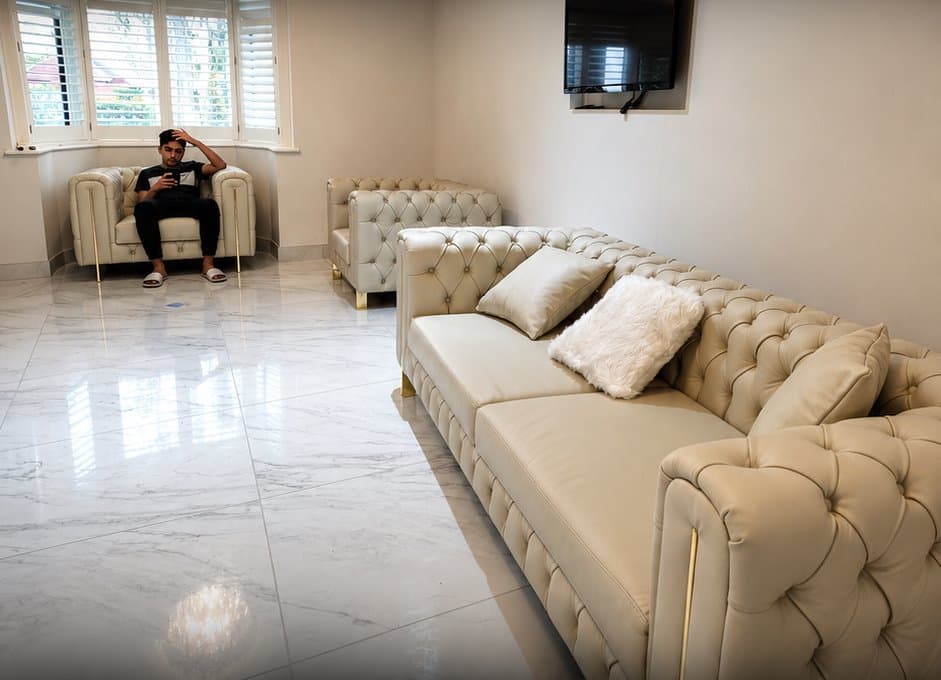
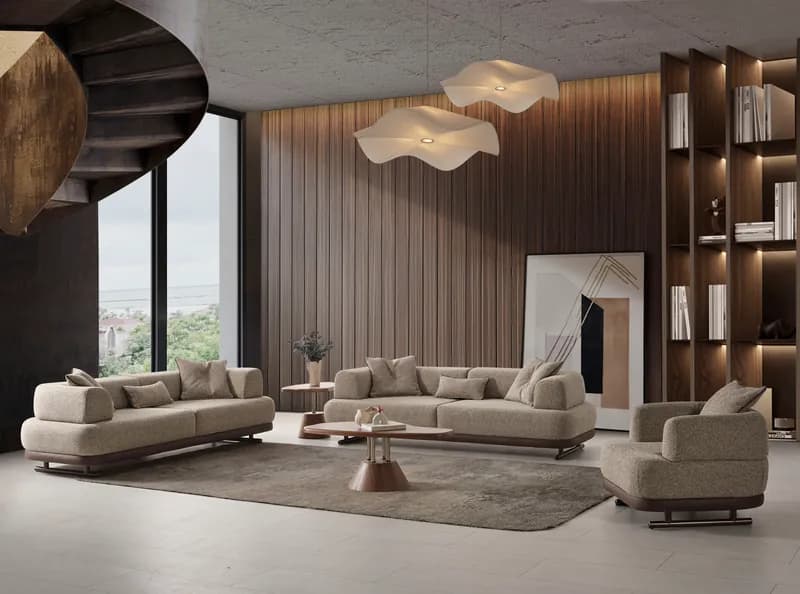
If you are comparing whole-room sets rather than individual seats, look at the layout as a system. For a coordinated look, a 3+2+1 often pairs well with matching armchairs or a separate footstool, while a corner sofa can be enough on its own. If you want to browse more layouts, see our sofa sets and our corner sofas to compare the shapes side by side.
- Choose a 3+2+1 if you need flexible seating positions.
- Choose it if your room has several doors or focal points.
- Choose it if you may move home and want easier handling later.
- Choose it if you prefer a classic, balanced arrangement.
How to choose the right option for your home in one simple check
Use this quick test before you commit. If your room has one main seating wall, enough open floor space and a clear path for delivery, a corner sofa is often the better fit. If your room is narrow, has awkward access, or needs the seats split up, a 3+2+1 sofa set is usually safer and easier to live with.
A worked example helps. In a 390 cm by 330 cm living room, a compact corner sofa may leave a useful centre area for a rug and coffee table, while a full 3+2+1 could crowd the space if all three pieces line one wall. In a 450 cm by 380 cm room, both can work, but the corner sofa gives a cleaner lounge feel and the 3+2+1 gives more options for rearranging.
If you want a made-to-measure solution, Özbay Furniture London can confirm size, fabric and colour before production, which is useful when a standard layout is close but not quite right. For bespoke or custom planning beyond a standard set, you can also explore custom-made furniture and ask for dimensions that suit your room rather than forcing the room to suit the sofa.
- If the room is open-plan, lean towards a corner sofa.
- If the room is narrow or irregular, lean towards a 3+2+1.
- If the access is tight, separate pieces reduce risk.
- If the room is large, either layout can work if measured properly.
Pieces from our collection
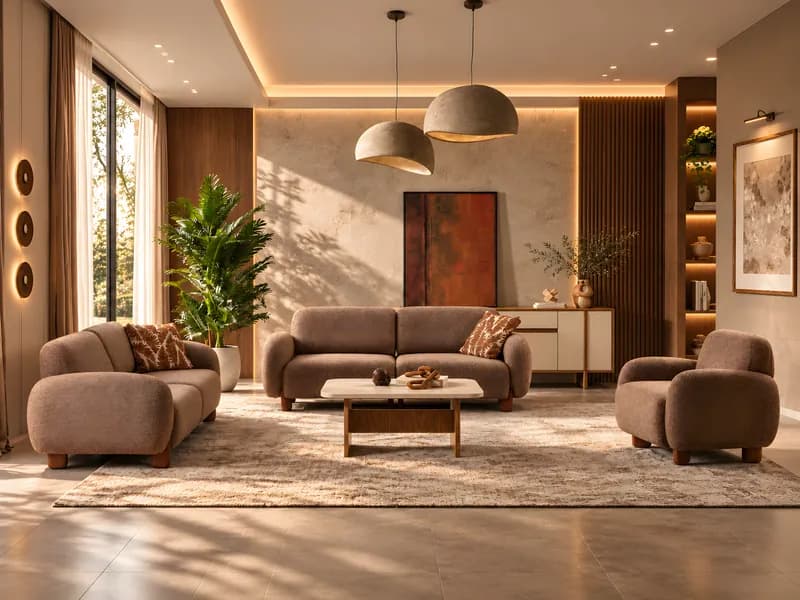
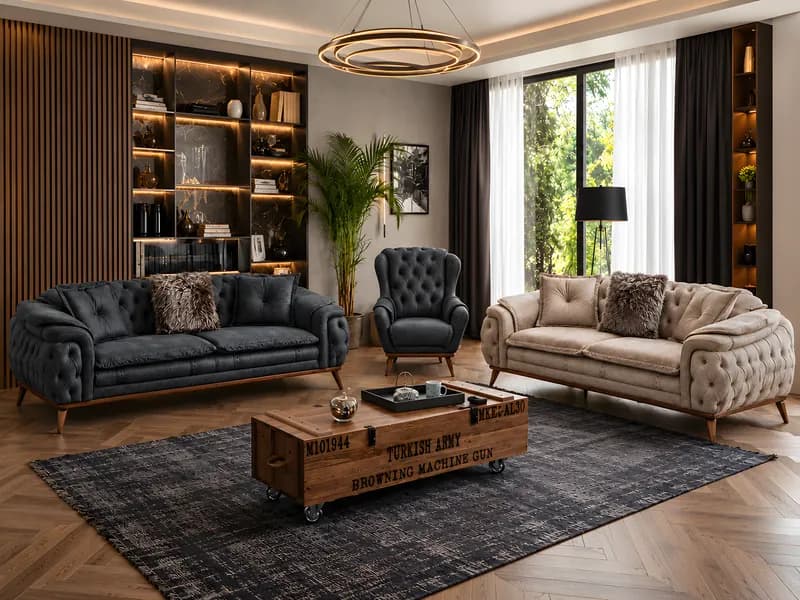
Real designs mentioned in this guide — delivered free to your door across Greater London.
Frequently asked questions
A corner sofa is usually better if you want the most seating in one footprint and your room can take an L shape. A 3+2+1 sofa set is usually better if you want flexibility, easier delivery through tight access, and a more traditional layout.
There is no single standard, but many corner sofas need roughly 250–330 cm on one side and 200–280 cm on the other. The safest way to judge fit is to measure the wall lengths, doorways and walkways in cm before you order.
For a quality made-to-order set, a realistic budget is often from about £2,400 to £3,500 and above, depending on size, fabric and layout. At Özbay Furniture London, some sets start from £2,430 to £2,662.
Yes. Measure the front door, hallway, stairs, turns and any lift before you order, because if the furniture does not fit through, it is the customer’s responsibility. This matters for both a corner sofa and a 3+2+1 set.
In-stock designs typically arrive in 3–5 weeks, while made-to-order and bespoke pieces usually take 6–8 weeks. Delivery to the door is free in Greater London, and elsewhere the delivery price is quoted on WhatsApp.