Buying Guide
How to Choose an Armchair in the UK: Sizes, Prices and Delivery
By the Özbay Furniture team 11 min read
The short answer
An armchair should fit your room, your body, your budget and your delivery route. In the UK, a sensible starting point is to check seat height, seat depth and the full width of the chair in cm, then compare fabric, leather and frame quality before you buy. Prices often range from a few hundred pounds for simple designs to well over £1,000 for made-to-order pieces, and delivery matters just as much as style if your home has narrow stairs, doors or a lift.
Key takeaways
- Measure the room and the delivery route before you order.
- A good armchair is usually 75–100 cm wide, depending on the room.
- Expect about £250–£600 for basic chairs and more for custom pieces.
- Check fabric, frame and seat depth, not just the style.
- Greater London delivery is free to the door; other areas are quoted on WhatsApp.
- If access is tight, confirm carry-in and upstairs carry before paying.
How do you choose an armchair for a UK home?
Start with the room, not the style. Measure the space where the armchair will sit, plus the route to get it inside, including the front door, hallway, stairs and lift. For most homes, a good single armchair is about 80–100 cm wide, 85–100 cm deep and 85–105 cm high, but the right size depends on how much floor space you have and whether you want a compact reading chair or a deeper lounge seat.
Think about how you use the chair. If you read in it, look for a supportive back and a seat depth around 52–58 cm; if you want to sit upright for short periods, a shallower seat can feel better. Seat height is also important: around 43–48 cm works for many adults, while lower seats can suit relaxed lounging but feel harder to get out of.
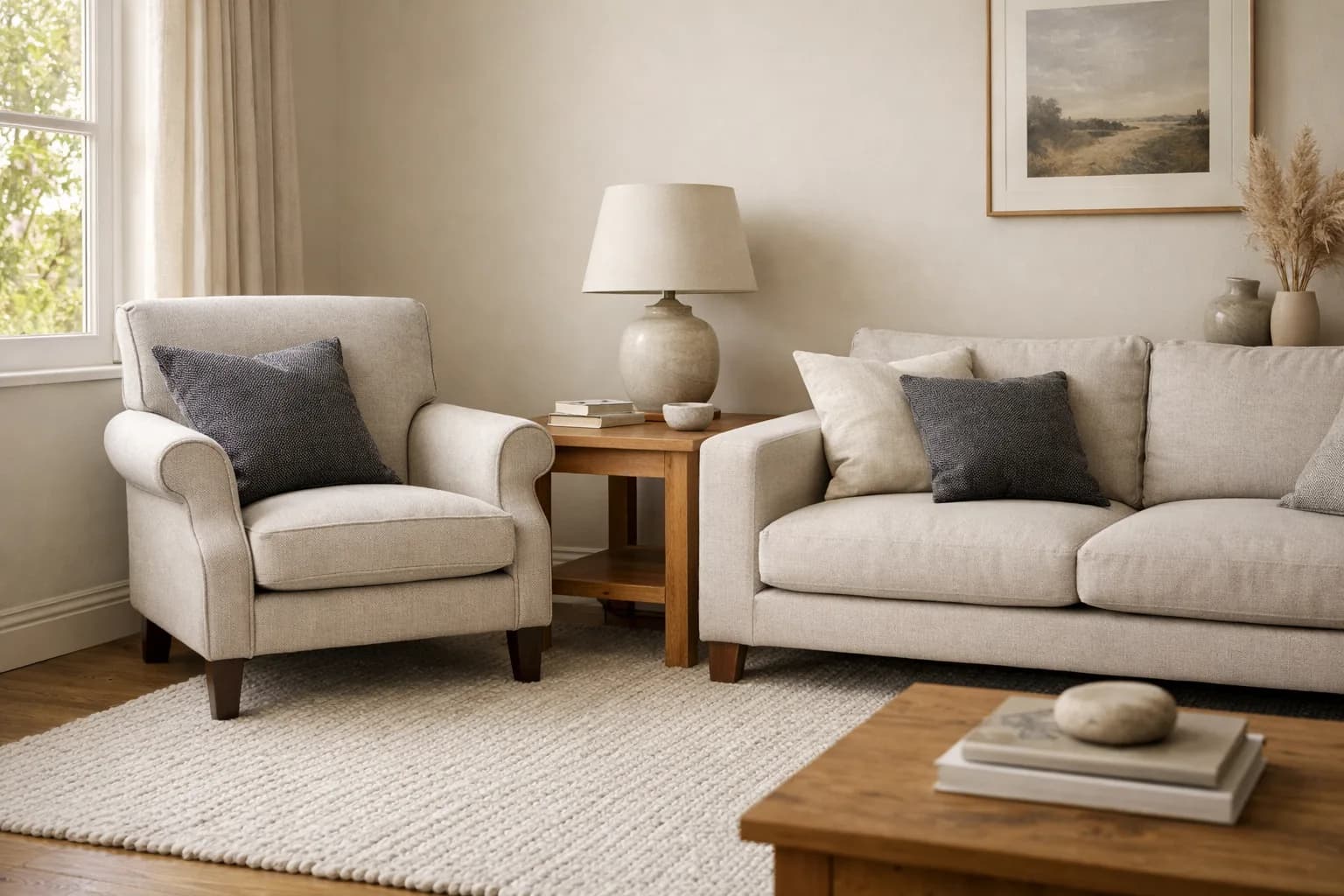
Before you compare fabrics or prices, decide where the armchair will live. In a living room, leave enough clearance so you can move around it without squeezing past corners or radiators. If you want to pair it with a sofa, match the seat height and the design language so the room feels planned rather than crowded.
- Measure the room where the chair will sit.
- Measure every doorway, turn and stair on the delivery path.
- Check seat height, seat depth and overall width in cm.
- Decide whether you want upright support or relaxed seating.
What armchair sizes should you look for?
For a typical UK living room, an armchair under 90 cm wide is easier to place in a flat or terrace house, while wider lounge chairs can work in larger rooms. A useful rule is to leave at least 60–75 cm of walking space around the chair where possible, and more if the door opens close by. If you are buying for a bay window or corner, make sure the armrests will not block sockets or curtains.
A compact armchair usually works well in a small room of around 3 m by 3.5 m, especially if there is already a sofa and coffee table. In a larger lounge, a pair of armchairs can create a seating area without needing a second sofa. If you are choosing a matching piece for a set, our armchairs and sofa sets are worth comparing because the proportions can be kept consistent across the room.
The most common mistake is buying by appearance alone. A chair that looks elegant online may have a high back, wide arms or a long footprint that changes the way the room works. Always compare the outside width, seat width, seat depth and total depth before you order, and remember that fabric adds a little bulk to the finished piece.
- Compact armchair: about 75–90 cm wide.
- Standard armchair: about 85–100 cm wide.
- Deep lounge chair: often 95–110 cm wide.
- Allow 60–75 cm of walking room where you can.
Which materials are best for an armchair?
Fabric is the most common choice because it feels warm and works in many homes. Velvet gives a softer, more formal look; woven fabrics are often easier for everyday use; and textured plains can hide small marks better than smooth finishes. Leather can be easier to wipe clean, but it can feel cooler in winter and usually shows wear patterns differently over time.
The frame matters as much as the cover. At Özbay Furniture London, the sofa frames are kiln-dried hornbeam hardwood, and the same approach to solid structure is useful to look for in any upholstered chair. A well-made frame should feel steady when you sit down, with no creaking or wobble, and the cushions should keep their shape after regular use.
If you want a custom look, check whether the fabric is taken from the colour card or made to order. Most designs can be ordered in a custom size, fabric or colour, and the price is confirmed before production. A fabric outside the colour card is made to order and cannot be cancelled or refunded, so it is worth checking the sample carefully before you commit.
- Velvet: softer look, good for formal spaces.
- Woven fabric: practical for daily use.
- Leather: easy to wipe, but choose carefully for comfort.
- Solid hardwood frame: look for stability and durability.
How much should an armchair cost in the UK?
For a basic armchair from a mainstream UK retailer, a realistic budget is often around £250–£600. Better finished designs, stronger frames and upgraded fabrics commonly move into the £600–£1,000 range. Made-to-order chairs, especially if they are tailored in size or fabric, can cost more, and that is normal if the piece is built around your room rather than sold off the shelf.
When comparing price, ask what is included. Delivery, carry-in, upstairs carry and installation can change the real cost a lot, especially in flats or houses with narrow stairs. If you are comparing with a bigger seating piece, the price per item may look low, but the delivered and installed total can still be higher than expected.
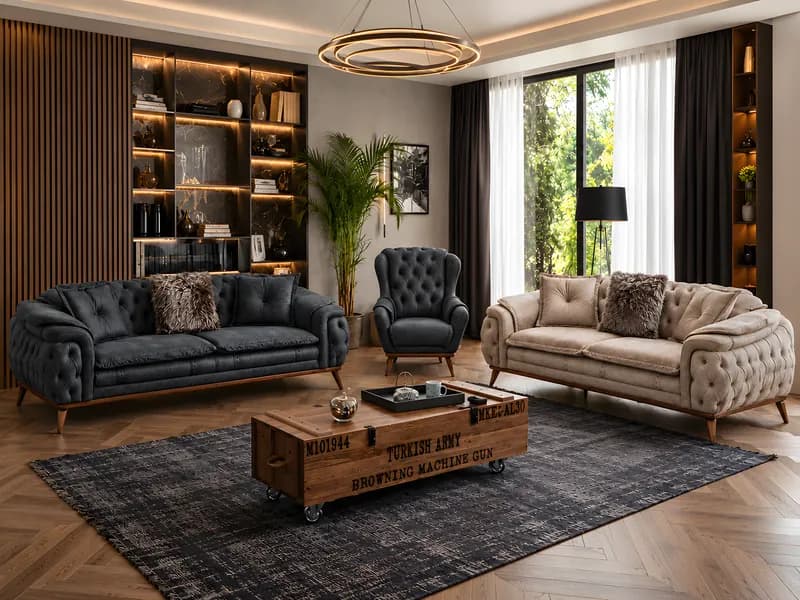
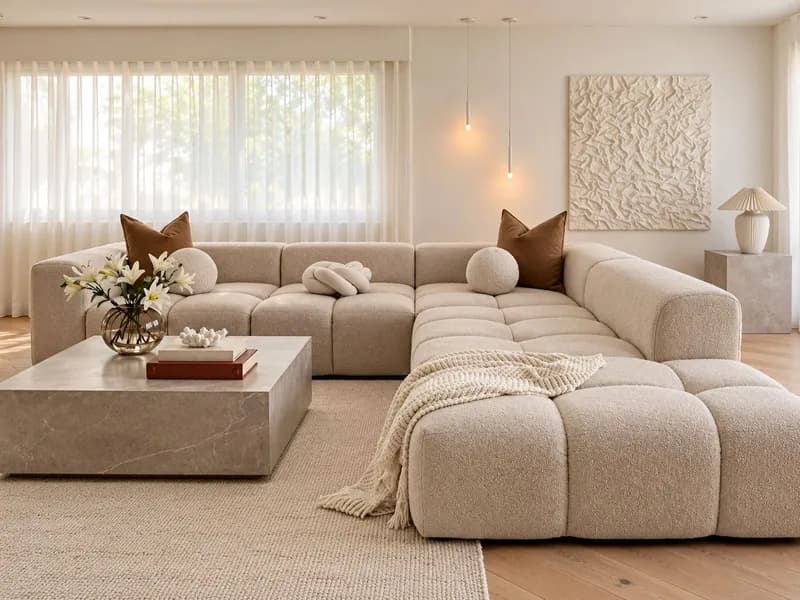
If you prefer a coordinated room, it can be sensible to compare a chair with a full set rather than buying separately. For example, pieces such as the Vizyon Sofa Set from £2,398 or the Dublin Sofa Set from £2,608 show how material, size and finish affect the overall price of a room scheme. That does not mean every armchair should be expensive, but it helps to understand where the value sits.
- £250–£600: simple everyday armchairs.
- £600–£1,000: better finishes and stronger specification.
- £1,000+: made-to-order or more tailored designs.
- Check whether delivery and carry-in are extra.
How does armchair delivery work in the UK?
Delivery is one of the biggest practical differences between chairs bought online and chairs bought locally. Özbay Furniture London offers free delivery to the door in Greater London, while delivery elsewhere in England, Scotland and Wales is quoted on WhatsApp. In-stock designs typically arrive in 3–5 weeks, while made-to-order and bespoke pieces usually take 6–8 weeks.
Before ordering, measure the front door, hallway, stair turns and lift again. Furniture that does not fit through cannot be cancelled or refunded, so the route matters as much as the room. If access is difficult, ask about carry-in and upstairs carry before paying, because those services are charged separately.
For many homes, a simple door-to-room delivery is enough, but flats often need more help. The paid extras are clear: sofa installation is £50, bedroom set installation £200, dining room installation £150, carry-in is £100 with a lift or £250 without a lift for a full 3+3+1 set, and upstairs carry is £150 per set. If you want to compare wider UK shipping guidance, the UK delivery page explains the process and timing in more detail.
- Greater London: free delivery to the door.
- Elsewhere in the UK: delivery quoted on WhatsApp.
- In stock: usually 3–5 weeks.
- Made to order: usually 6–8 weeks.
What mistakes should you avoid before buying an armchair?
The most common mistake is under-measuring the access route. Many buyers check the living room but forget the narrowest point in the hallway, the tightest stair turn or the lift door. If the chair cannot physically get into the home, there is no simple fix after ordering, so measure twice and compare with the seller before you pay.
Another mistake is choosing a fabric only because it looks good in a photo. Light colours can work well, but they need more care; darker shades can hide marks but may look heavy in a small room. If you have children, pets or heavy daily use, ask for a practical fabric and confirm how it behaves before you place the order.
Finally, do not ignore the rest of the room. An armchair should sit comfortably beside the sofa, coffee table and circulation space, not squeeze the room into a corridor. If you want a custom arrangement or a matching wider scheme, custom-made furniture can help you keep the proportions right instead of forcing a standard size to fit.
- Do not skip the door and stair measurements.
- Do not choose fabric from a photo alone.
- Do not ignore room circulation space.
- Do not assume access problems can be fixed later.
How do you compare types of armchair before ordering?
A classic upholstered armchair is best if you want something easy to place beside a sofa or in a bedroom corner. A deeper lounge chair suits reading and long evenings, while a firmer upright chair is better for guests and smaller spaces. If you are designing a whole room, it can help to compare the armchair with corner seating or a larger sofa scheme first, especially if you are furnishing a new home.
Özbay Furniture is useful when you want a matching look across several pieces, because many designs can be ordered in custom sizes and fabrics. That makes it easier to keep the chair aligned with the rest of the room, rather than settling for a near match. You can also browse our corner sofas if you are working with a living room that needs more than one seating option.
If your home is a London flat, think about access, not just appearance. A compact chair with a stable frame, a medium seat depth and a fabric you can live with every day is often a better buy than a larger statement piece that is hard to carry, hard to turn and hard to place. The best choice is usually the one that suits both the room and the delivery route.
- Classic upholstered chair: easiest to place.
- Deep lounge chair: better for long sitting.
- Upright chair: useful in smaller rooms.
- Matching custom pieces: good for full-room schemes.
What should UK shoppers check before they order?
Read the product details and ask for exact dimensions in cm if anything is unclear. For a custom order, confirm the final price before production starts, and confirm the fabric, colour and size in writing. If you are ordering from outside Greater London, ask for the delivery quote on WhatsApp before you pay so you can budget properly.
It is also worth checking warranty and aftercare. Özbay Furniture gives a 2-year warranty on frame and manufacturing, and technical service visits are arranged within 30–45 days. That is helpful if you want reassurance that the piece is backed by a defined service process rather than just a sale.
For general buying rights in the UK, this gov.uk guide to faulty goods is a useful non-retail reference point before you place any furniture order. It helps to know what applies to made-to-order goods, what counts as a fault, and why access problems are different from product faults.
- Confirm exact dimensions in cm.
- Confirm price before production.
- Check the delivery quote before paying.
- Keep warranty and aftercare details.
Pieces from our collection
Real designs mentioned in this guide — delivered free to your door across Greater London.
Frequently asked questions
Look for an armchair around 75–90 cm wide and check the depth carefully, because oversized arms can make a small room feel cramped. Leave enough room to walk around it and avoid blocking doors, radiators or sockets.
A sensible budget is often £250–£600 for a basic model, £600–£1,000 for better materials and finishing, and more for made-to-order designs. Delivery and carry-in can add to the total, so always compare the delivered price rather than the chair price alone.
A practical woven fabric is often the easiest choice because it handles everyday use well and can hide small marks better than a smooth finish. Velvet can look and feel softer, but it usually needs more care than a simple textured fabric.
In-stock designs usually arrive in 3–5 weeks, while made-to-order and bespoke pieces usually take 6–8 weeks. If you live outside Greater London, the delivery price is quoted on WhatsApp, so it is best to ask early.
Yes, most designs can be ordered in a custom size, fabric or colour, and the price is confirmed before production. If you choose a fabric outside the colour card, it is made to order and cannot be cancelled or refunded, so confirm it carefully first.